Parenting Today was designed to provide a large-scale, current picture of parenting in Australia

A total of 10,049 parents and carers of children aged 0–18 participated in the first national survey in 2025. Participants came from every state and territory and represented a broad range of family structures, cultural and social backgrounds, locations and circumstances.

The next national survey wave is planned for 2028, creating opportunities to examine how parenting experiences change over time.
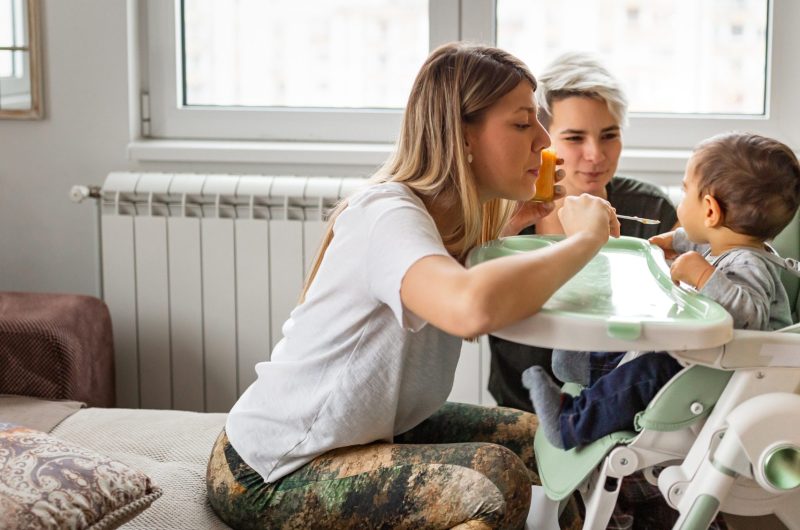
Family life. Lesbian couple with baby at home. One of them spoon feeding baby who is seated in a high chair in the living room

Parenting Today uses a repeated cross-sectional design

Each survey wave will collect responses from a new sample of parents and carers, providing a snapshot of parenting at a particular point in time.

Comparing findings across future survey waves will make it possible to examine broader patterns and changes in parents’ experiences, wellbeing and support needs. The survey does not follow the same individual families over time.

The survey content was informed by previous Parenting Today research, established measures, emerging policy and practice priorities, and consultation with relevant experts and stakeholders.

What questions were asked

The survey included 122 items containing 294 individual questions. Some items consisted of several related questions or statements presented together.

Questions covered seven research topics, including parent wellbeing, parenting experiences, support, parenting practices, digital life and the broader social and environmental conditions affecting families.

Many questions used established research measures so that experiences such as psychological distress, loneliness, parenting confidence and social support could be examined consistently.

Recruitment and participation

How participants were recruited

Parents and carers were invited to complete the survey online or by phone. Recruitment used several approaches to reach a large and diverse cross-section of families, including online research panels and broader community promotion. In addition, random telephone recruitment was also used in Victoria. 

Offering different ways to participate helped make the survey accessible to parents with different preferences and circumstances.

Who took part

The survey was completed by 10,049 parents and carers of children aged 0–18. This includes kinship and foster carers, grandparents, and anyone in a child-raising role.

Participants came from metropolitan and regional areas and represented a wide range of family, cultural, socioeconomic and household circumstances.

An overview of the participant profile is available in the survey snapshot, and more detailed descriptions are forthcoming in upcoming publications.

Analysis and reporting

How findings are analysed

Where appropriate, analyses may examine differences across parent, family, household or geographic characteristics.

Statistical methods and weighting may be used to improve the accuracy of particular comparisons and will be explained in the relevant report.

How findings are reported

Parenting Today findings will be shared in several ways, including topic-based analyses, national reports and jurisdiction-specific summaries.

Results are reported for groups rather than individuals, and findings are only published where there is sufficient information to support reliable interpretation and protect participant privacy.

Ethics and quality of research

Ethics and privacy

Parenting Today was approved by the Parenting Research Centre’s Human Research Ethics Committee. Participation was voluntary, and survey data is managed in line with the Parenting Research Centre’s privacy, information security and research governance requirements.

To increase participation from a broad spectrum of the population, survey information was provided in plain language, Easy Read English, and video modes. The survey could also be completed by phone, and in languages other than English. 

Published findings focus on broader patterns and do not identify individual participants.

Understanding the findings

Parenting Today provides a large and detailed picture of parenting experiences across Australia, making it possible to explore patterns across different topics, groups and locations.

Like all survey research, the findings are based on self-reported experiences at a particular point in time. They can identify patterns and associations, but not prove that one factor caused another. Findings for smaller groups or areas are only reported where the sample size and data quality support reliable interpretation.

FAQs

The Parenting Today website is not compatible with Internet Explorer. Please use a modern browser such as Chrome, Firefox, Edge, or Safari for the best experience.